

How to Pair Sparkling Water with Food Like a Pro
Sparkling beverage pairing is the practice of matching carbonated water to specific dishes so that effervescence, acidity, and mineral content work together to refresh the palate and sharpen flavor perception. When you pair sparkling water with food, you are not just choosing a drink. You are making a deliberate sensory decision that changes how every bite tastes. The carbonation in sparkling water resets the sensory baseline between bites, cutting through fats and oils the same way a squeeze of lemon cuts through a rich sauce. Brands like Topo Chico, San Pellegrino, and Perrier each bring different mineral profiles to the table, and those differences matter more than most home cooks realize.
How to pair sparkling water with food: the core principles
The single most reliable principle behind sparkling water food pairings is acidity. Acidity refreshes the palate and is the most dependable tool you have when matching bubbly drinks with fatty or rich foods. Carbonation amplifies that effect by physically scrubbing the tongue, which is why a sip of sparkling water after a bite of fried chicken feels so satisfying.
The second principle is contrast. Sparkling water does not need to share flavors with your food. It needs to balance them. A creamy brie needs something that cuts through the fat. A spicy Thai curry needs something that lifts the heat. Acidity and bubbles do that work far more reliably than trying to match flavor notes.
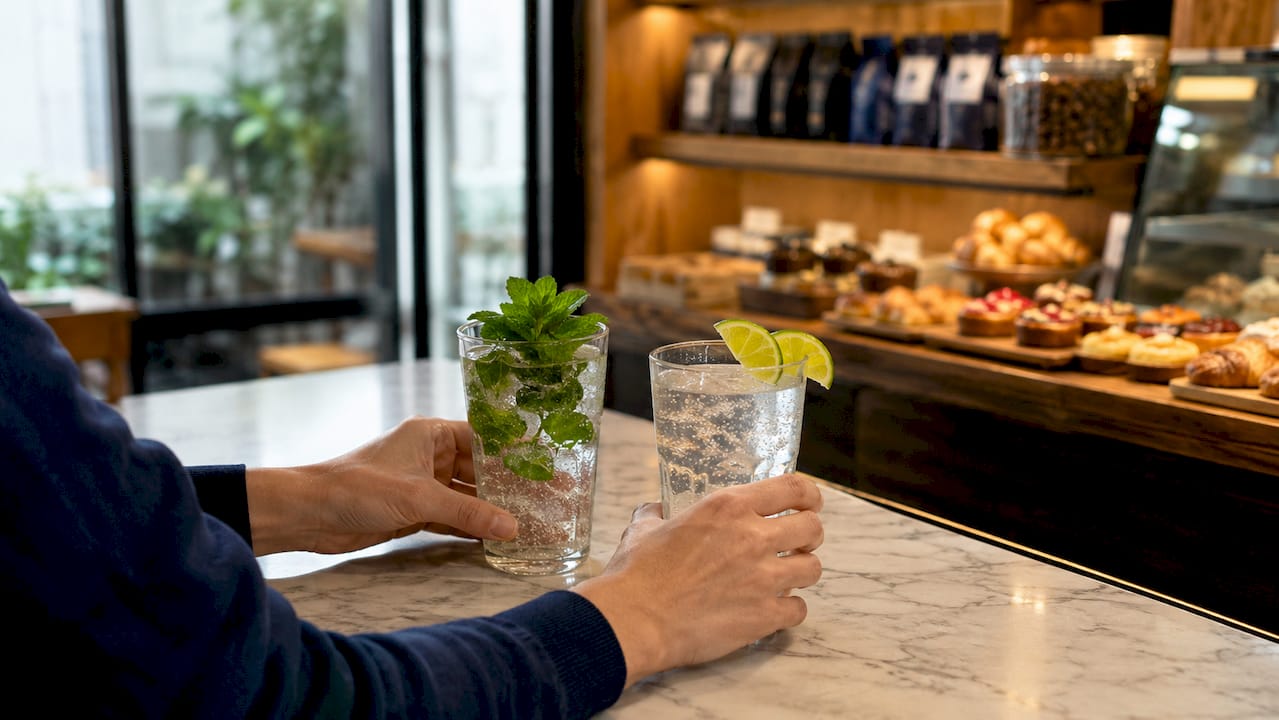
The third principle is mineral content. Sodium and bicarbonate in sparkling water are not just background noise. Sodium-rich waters like Topo Chico match well with spicy and rich foods because sodium inhibits bitter receptors and enhances umami. Bicarbonate-rich waters, like San Pellegrino, work better alongside saucy or acidic dishes because bicarbonate neutralizes excess acidity on the palate.
What foods pair best with sparkling water?
Classic sparkling water food pairings fall into five categories, and each one has a clear sensory reason behind it.
- Fried and fatty foods: Tempura, crispy calamari, and potato chips are the textbook cases. Carbonation cleanses the palate by cutting through oils, making each bite taste as fresh as the first.
- Soft cheeses: Brie, burrata, and fresh mozzarella contrast beautifully with the mineral bite of sparkling water. The bubbles prevent the creaminess from coating your palate and dulling subsequent flavors.
- Seafood: Oysters, shrimp cocktail, and grilled salmon all benefit from sparkling water’s crispness. The effervescence amplifies the clean, briny notes in fresh seafood without adding sweetness.
- Spicy dishes: Sparkling water balances heat in spicy foods the same way sparkling wine does. The acidity and lift disperse capsaicin on the tongue rather than concentrating it.
- Citrus-forward desserts: Lemon tart, key lime pie, and orange sorbet are enhanced by effervescence amplifying their brightness. The bubbles make citrus flavors pop rather than flatten.
Pro Tip: Salty snacks like popcorn, pretzels, and rice crackers are underrated sparkling water pairings. The carbonation brightens the salt without adding sweetness, making each handful taste cleaner.
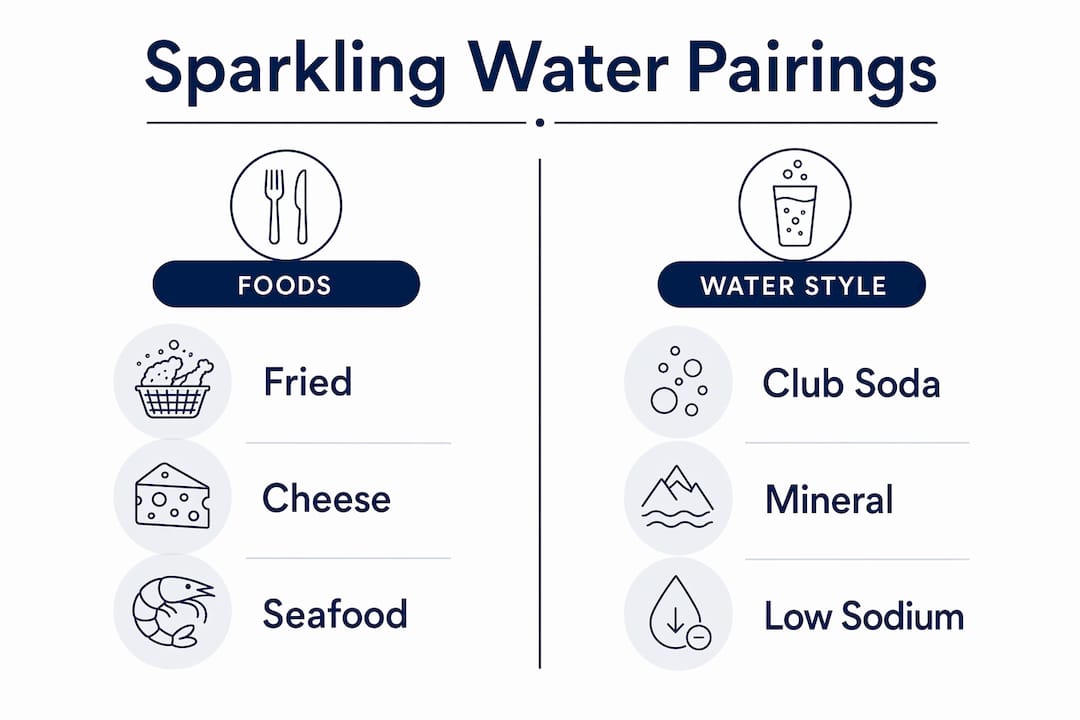
Here is a quick comparison of food categories and the sparkling water styles that serve them best:
| Food category | Best sparkling water style | Why it works |
|---|---|---|
| Fried and fatty foods | Club soda or high-carbonation seltzer | Strong bubbles cut through oil and fat |
| Soft cheeses | Sparkling mineral water (San Pellegrino) | Minerals contrast creaminess without overpowering |
| Seafood | Lightly carbonated mineral water | Crispness enhances brine without masking delicate flavor |
| Spicy dishes | Sodium-rich water (Topo Chico) | Sodium inhibits bitterness and lifts heat |
| Citrus desserts | Plain seltzer or lightly flavored sparkling water | Effervescence amplifies citrus brightness |
How to choose the right sparkling water for your meal
Not all sparkling water is the same, and the differences between types have a direct impact on how well they work at the table.
- Seltzer is plain water carbonated with CO2 and nothing else. It is the most neutral option and works well when you want bubbles without any mineral interference.
- Club soda has added minerals, including sodium bicarbonate and potassium sulfate. Club soda’s sodium content inhibits bitter receptors and enhances umami, making it the best choice for fried and savory foods.
- Sparkling mineral water (San Pellegrino, Perrier, Gerolsteiner) contains naturally occurring minerals from the source. These waters have the most complex flavor profiles and pair best with cheese, charcuterie, and multi-course meals.
- Tonic water contains quinine and added sugar, which gives it a distinct bitter-sweet flavor. It is not a neutral pairing tool and works best with gin-based drinks or very bitter foods.
Carbonation strength also matters. High-carbonation waters like Topo Chico deliver an aggressive palate cleanse that works well with bold, rich, or spicy dishes. Lightly carbonated waters like Perrier are better alongside delicate seafood or mild salads where you want refreshment without overwhelming the dish.
Flavored sparkling waters deserve a separate warning. Flavored sparkling waters can worsen digestive symptoms due to added sweeteners, even when the carbonation itself is tolerable. For pairing purposes, artificial sweeteners also create a lingering sweetness that clashes with savory dishes. Plain sparkling water is almost always the better pairing choice.
Pro Tip: Read the label before you buy. If you see “natural flavors,” citric acid, or any sweetener listed, that water will behave differently at the table than plain sparkling water. For the cleanest pairings, choose waters with nothing added beyond CO2 and natural minerals.
Serving temperature is the final variable. Cold sparkling water retains carbonation longer and delivers a sharper palate-cleansing effect. Room-temperature sparkling water goes flat faster and loses the sensory contrast that makes food pairings work.
How to serve sparkling water to get the most from every pairing
Serving sparkling water well is as deliberate as serving wine well. These practices make a real difference.
- Serve it cold. Temperature and glassware choices impact effervescence retention and the overall sensory effect. Cold water holds carbonation longer and delivers a crisper palate cleanse.
- Use the right glass. A tall, narrow glass or a fluted glass preserves bubbles better than a wide tumbler. Stainless steel bottles from Getfizzit also maintain temperature and carbonation effectively, which matters during longer meals.
- Pace your sips. The most effective way to use sparkling water as a palate cleanser is to sip between bites or between courses, not continuously throughout the meal. Continuous sipping reduces effectiveness and increases acid exposure on your teeth.
- Protect your enamel. Drink sparkling water during meals rather than sipping it slowly over hours. Saliva flow stimulated by eating buffers acidity far better than drinking sparkling water alone. Rinse with still water after the meal and wait before brushing.
- Match the serving size to the course. A small pour (about 4 ounces) works well as a palate cleanser between courses. A full glass is appropriate alongside a main course where you want ongoing refreshment.
For guests with digestive sensitivities, always have still water available. Sparkling water’s effects on digestion vary individually. Some people with IBS tolerate it well, others do not. Offering both options is good hosting.
Common mistakes to avoid when pairing sparkling water with food
Even experienced home cooks make these errors. Avoiding them takes your pairings from good to genuinely impressive.
- Reaching for flavored sparkling water by default. Citrus-flavored or berry-flavored sparkling waters seem like a natural fit for food, but their added sweeteners or citric acid often clash with savory dishes and create an unpleasant aftertaste.
- Choosing high-carbonation water for delicate dishes. A heavily carbonated water like Topo Chico overwhelms a delicate ceviche or a light sole fillet. Match carbonation intensity to dish intensity.
- Sipping continuously instead of pacing. Slow, continuous sipping across a two-hour meal increases acid contact time on tooth enamel. Drink with intention, not habit.
- Ignoring mineral content. High-sodium water with a delicate white fish can make the dish taste saltier than intended. Check the mineral panel on the label before pairing with subtle flavors.
- Serving sparkling water warm. Warm sparkling water goes flat quickly and loses the textural contrast that makes it useful as a pairing tool.
“The goal of pairing sparkling water with food is not to find a flavor match. It is to find a sensory balance. Bubbles and acidity are your tools. Use them with intention.”
Key takeaways
Pairing sparkling water with food works because carbonation and acidity reset the palate, and choosing the right water type, mineral content, and serving temperature determines how well that reset actually performs.
| Point | Details |
|---|---|
| Acidity is the core principle | Carbonation and mild acidity cut through fat and reset flavor perception between bites. |
| Match carbonation to dish intensity | High-carbonation waters suit bold, rich, or spicy dishes; light carbonation suits delicate seafood and salads. |
| Mineral content changes the pairing | Sodium-rich waters enhance umami and spice; bicarbonate-rich waters balance acidic or saucy dishes. |
| Avoid flavored waters for savory pairings | Added sweeteners and citric acid in flavored sparkling waters clash with most savory dishes. |
| Pace your sips for best results | Sipping between bites maximizes palate cleansing and reduces dental enamel exposure to acidity. |
Why sparkling water deserves a permanent seat at your table
I have served sparkling water alongside food for years, and the reaction from guests is almost always the same. They are surprised. They expect it to be a neutral placeholder, something to drink between wine pours. Then they try it alongside a plate of tempura or a wedge of aged cheddar, and something clicks.
The pairing that converted me was sparkling mineral water with a simple cheese board. The mineral bite of San Pellegrino against a creamy brie was sharper and more satisfying than most wine pairings I had tried with the same cheese. No alcohol, no sugar, no complexity required. Just bubbles and minerals doing exactly what they are supposed to do.
What I have learned from experimenting is that most people underestimate how much carbonation level matters. Switching from a lightly carbonated water to Topo Chico alongside a spicy dish is not a subtle change. It is a completely different experience. The stronger bubbles and higher sodium content in Topo Chico actively suppress bitterness and lift heat in a way that lighter waters simply cannot.
My honest recommendation for home cooks is to treat sparkling water the way you treat olive oil. Buy two or three different types, understand what each one does, and choose deliberately based on what you are cooking. The health benefits of sparkling water are a bonus. The real reward is how much better your food tastes when you pair it thoughtfully.
— Henry
Make your own sparkling water at home with Getfizzit
If you are pairing sparkling water with food regularly, buying bottles from the store gets expensive and wasteful fast. Getfizzit solves both problems.
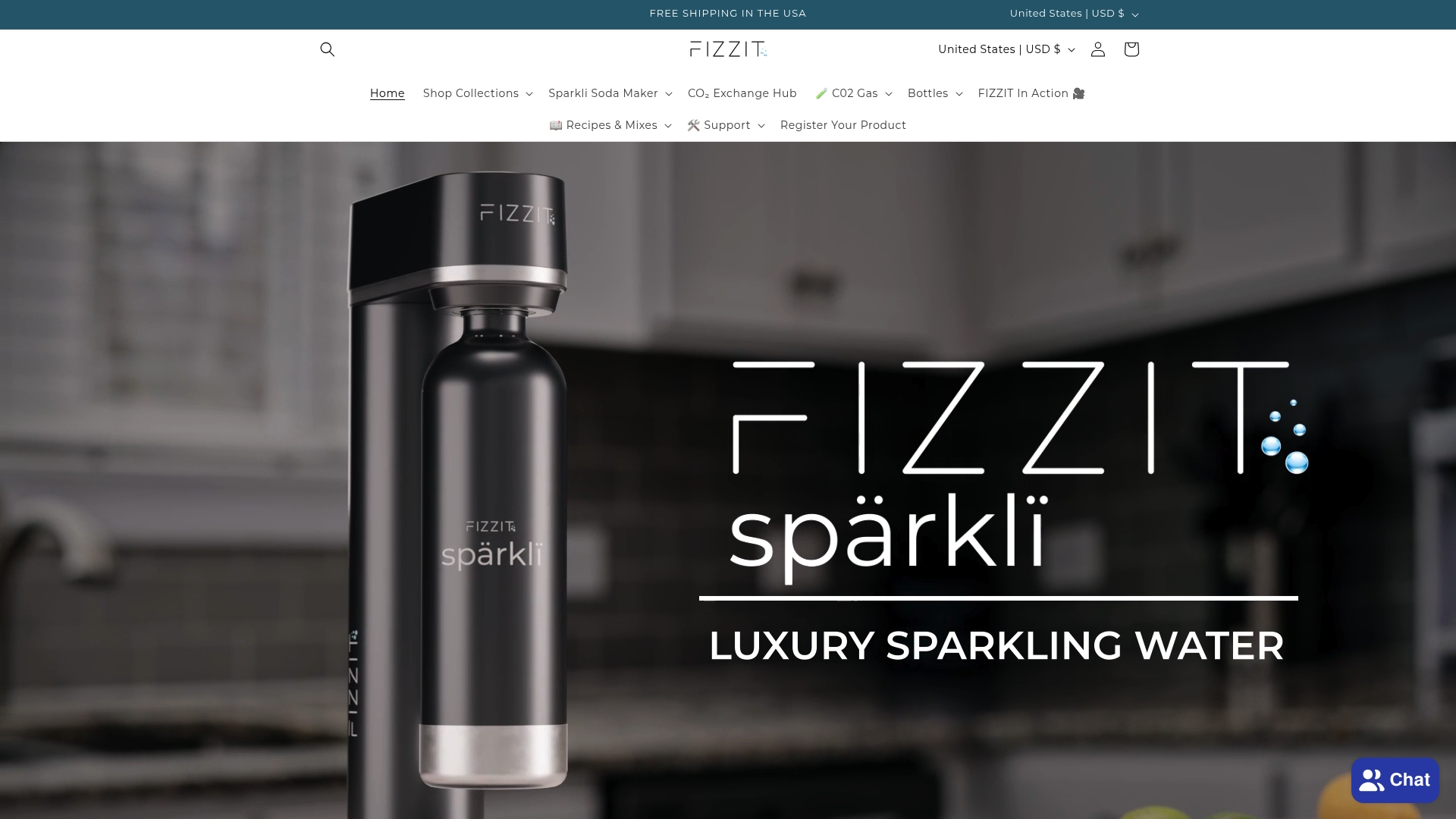
The FIZZIT Spärklï soda maker lets you carbonate still water at home to exactly the level you want, from light effervescence for delicate seafood pairings to intense fizz for spicy dishes and fried foods. The stainless steel bottle keeps your water cold longer, which means better carbonation retention at the table. No plastic waste, no artificial additives, and no compromise on the quality of your bubbles. Visit Getfizzit to explore the full range of sparkling water makers and accessories built for home cooks who take their dining experience seriously.
FAQ
What foods pair best with sparkling water?
Fried foods, soft cheeses, seafood, spicy dishes, and citrus-forward desserts are the best foods with sparkling water. Carbonation and mild acidity cleanse the palate and enhance flavor contrast across all of these categories.
Does mineral content in sparkling water affect food pairings?
Yes. Sodium-rich sparkling waters like Topo Chico enhance umami and balance spice, while bicarbonate-rich waters like San Pellegrino work better alongside saucy or acidic dishes. Checking the mineral panel on the label before pairing makes a real difference.
Is sparkling water bad for your teeth when drinking it with meals?
Drinking sparkling water during meals is significantly safer for tooth enamel than sipping it slowly between meals. Saliva flow stimulated by eating buffers acidity, and rinsing with still water afterward further reduces enamel exposure.
Should I use flavored sparkling water for food pairings?
Plain sparkling water is almost always the better choice for pairing with food. Flavored sparkling waters often contain citric acid or artificial sweeteners that clash with savory dishes and can cause digestive discomfort in sensitive individuals.
How do I choose between seltzer, club soda, and sparkling mineral water for pairing?
Use seltzer for neutral, clean pairings where you want bubbles without mineral influence. Choose club soda for fried and savory foods because its sodium content enhances umami. Reach for sparkling mineral water like San Pellegrino or Perrier for cheese boards and multi-course meals where mineral complexity adds to the experience.